



Few neighborhoods in the southwest valley look as green as Rhodes Ranch. The guard-gated community wraps around its golf course, and many homes sit right along the fairways with views that buyers love. That same setting puts outdoor heat pump equipment in the path of mowers, irrigation, and the occasional stray golf ball.
32 Degrees AC & Furnace Repair repairs heat pumps throughout Rhodes Ranch, whether your home backs up to the course or sits deeper in the neighborhood. We diagnose the real problem, walk you through your options, and recommend repairs before replacements whenever possible. No pressure and no talking in circles.
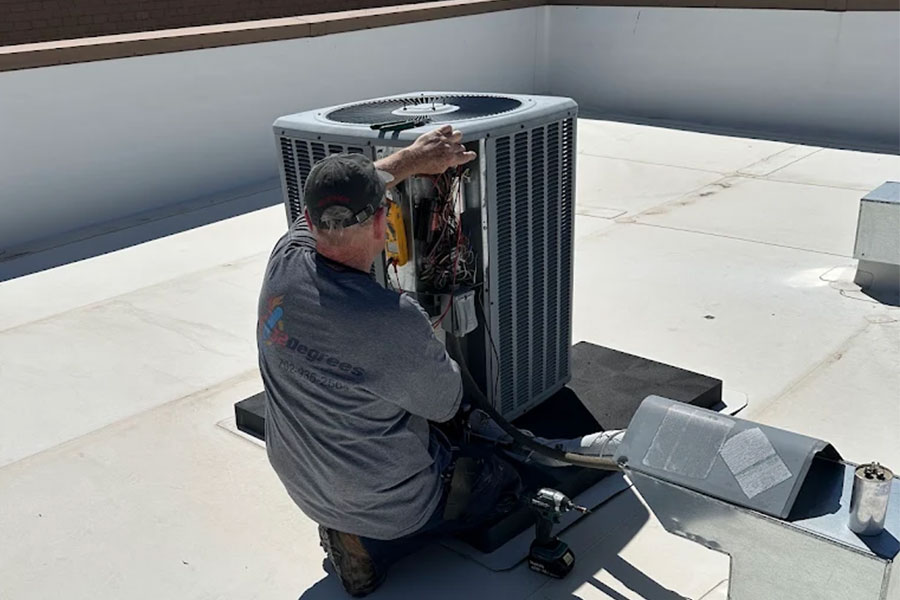
Homes near open turf and heavy landscaping often show their own pattern of warning signs.
Physical damage and debris may seem minor, but they cut into how well the heat pump moves heat. Getting them fixed early helps the system keep up when temperatures climb past 110.
Life on a golf course brings a steady stream of debris. Mowers and leaf blowers send grass clippings and fine dust toward outdoor units, and that material mats onto the coil and blocks airflow. Over a summer, a partly blocked coil can drive up operating pressures and wear out the compressor sooner.
Irrigation is another factor. Course and yard sprinklers run often in the southwest valley, and the hard water leaves mineral spots and residue on coil fins and cabinets. A golf ball that finds its way into the yard can also dent a cabinet or flatten a section of fins.
Most homes in Rhodes Ranch were built from the late 1990s through the 2000s, so many systems are well into their second decade. Age combined with constant debris exposure is why we see so many fan motor, capacitor, and coil problems here. The good news is that many of these issues are repairable.
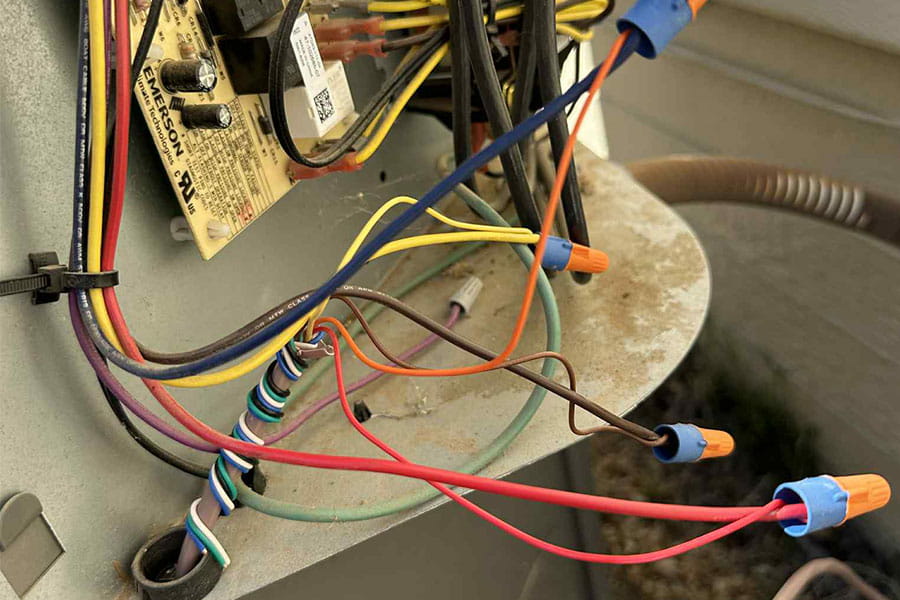
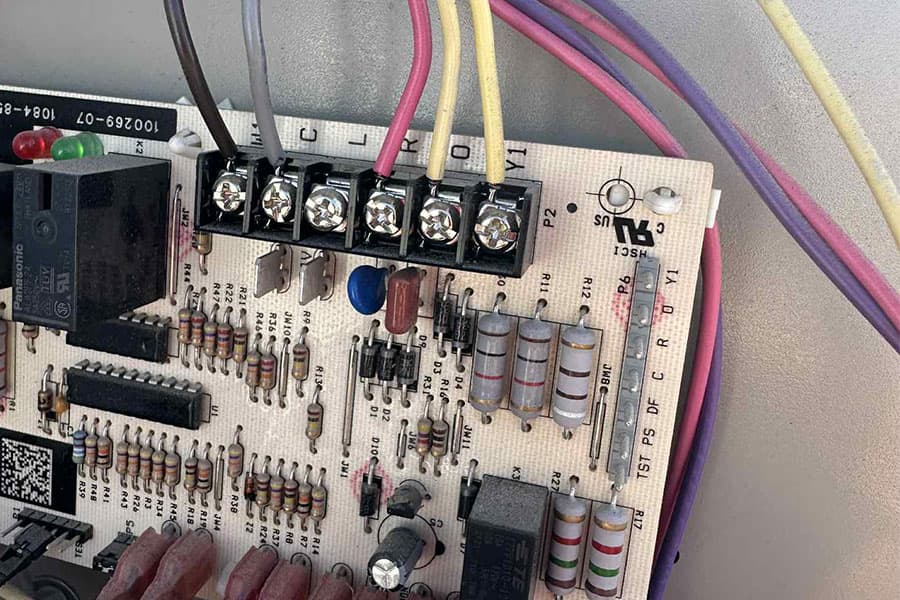
Our technician starts outside, inspecting the coil, fins, fan, and cabinet for debris and physical damage. From there, we test electrical components, check refrigerant levels, and run the system in heating and cooling modes to see how it performs under load. Indoors, we look at the air handler, filter, and drain line.
Common fixes include deep cleaning matted coils, straightening bent fins, replacing fan motors and capacitors, repairing refrigerant leaks, and fixing reversing valves or defrost controls. If the unit sits in a spot that collects a lot of debris, we suggest simple ways to reduce buildup going forward. Each repair is explained before we start.
When the system is beyond a sensible repair, we will tell you plainly. Otherwise, our focus stays on getting the equipment you already have running strong. That keeps your costs grounded and your home comfortable.
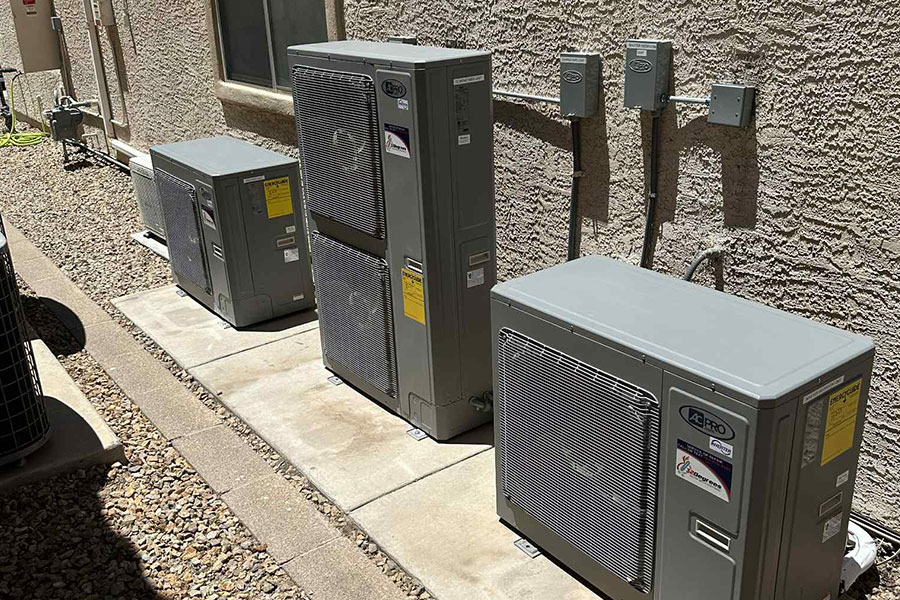
Tom’s home sits along one of the fairways in Rhodes Ranch, and he loves the view. What he did not love was the way his heat pump had started struggling every afternoon in June. The air from the vents felt warmer each day, and the outdoor unit sounded louder than usual.
Our technician found the outdoor coil covered in a thick mat of grass clippings and dust, plus a section of fins flattened where a golf ball had hit. The strain had also worn down the run capacitor. He cleaned the coil thoroughly, straightened the damaged fins, and replaced the capacitor.
The system was cooling strongly again before he left. He also suggested Tom ask his landscaper to blow clippings away from the unit instead of toward it. A small change like that makes a real difference over a long summer.
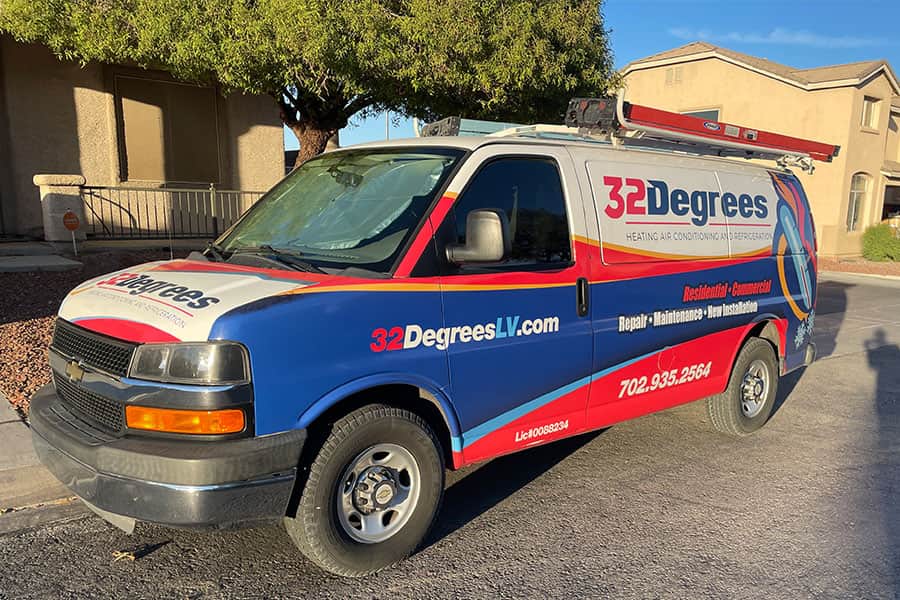
Our team works the way we would want someone to work in our own homes.
Rhodes Ranch homeowners have high standards for their homes, and so do we. Every visit is handled with care and respect.
Yes. Clippings and dust can mat onto the outdoor coil, block airflow, and make the system work harder. Keeping the area clear and having the coil cleaned helps.
In many cases, yes. A technician can straighten bent fins to restore airflow, though heavily damaged sections may need further repair.
Look for dents, bent fins, or new noises. If the unit sounds different or cools poorly afterward, schedule an inspection.
Loud noises can come from a failing fan motor, loose parts, debris in the unit, or a struggling compressor. A quick diagnostic can find the cause before it gets worse.
Ask them to blow clippings and leaves away from the unit, keep plants trimmed back, and avoid aiming sprinklers at the coil.