



At midnight in Paradise, the air outside can still feel like late afternoon. Concrete, asphalt, and the glow of the Strip trap heat long after sunset, so homes here get little relief overnight. For a heat pump, summer nights are nearly as demanding as summer days.
32 Degrees AC & Furnace Repair repairs heat pumps in houses, condos, and townhomes across Paradise, from the neighborhoods around UNLV to the older streets east of the Strip. We find the cause and explain it in plain language. Whenever a repair makes more sense than a replacement, that is what we recommend.
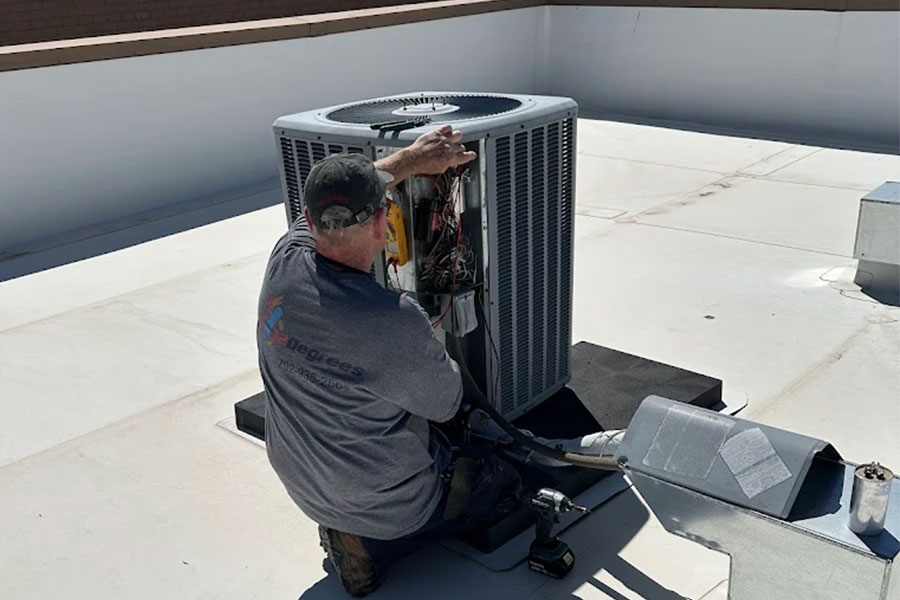
Because heat pumps in Paradise run so hard overnight, many problems first show up after dark.
If your home never seems to cool down at night, the system may be losing ground. That is worth acting on before the hottest weeks of summer arrive.
Paradise is one of the most built-up parts of the Las Vegas Valley, and all that development creates an urban heat island that keeps nighttime temperatures higher than in outlying areas. Heat pumps here rarely get the cool overnight break that helps equipment recover. Compressors, capacitors, and fan motors simply log more hours each year.
Many homes in Paradise also date back to the 1960s, 1970s, and 1980s. Heat pumps in these houses are often retrofits connected to older ductwork sized for different equipment, which limits airflow and strains the system. Neighborhoods like Paradise Palms have plenty of character, but they also come with these mechanical challenges.
Condos and townhomes bring tight installation spaces, shared walls, and closet air handlers that can be hard to service. Limited airflow around the equipment makes overheating more likely. It also leads to earlier part failures.
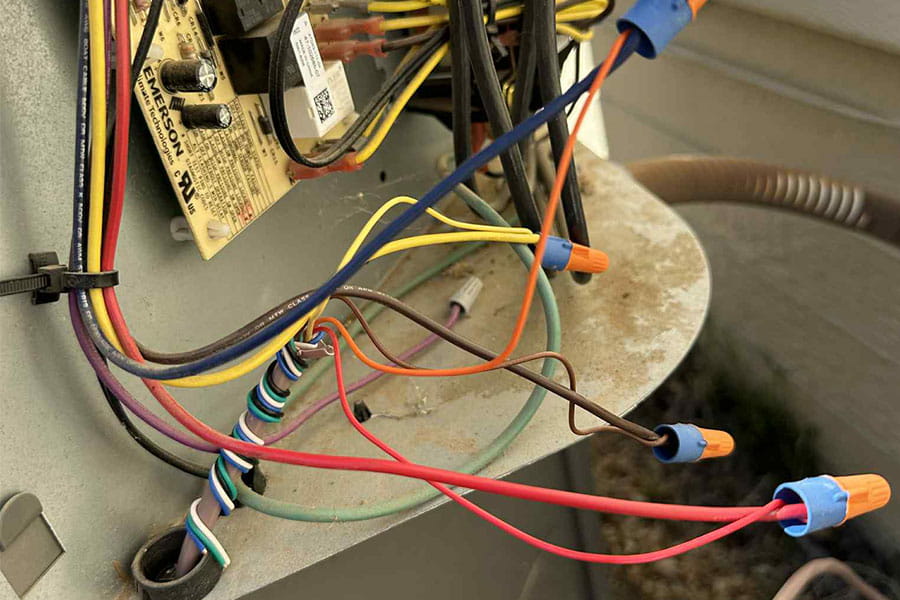
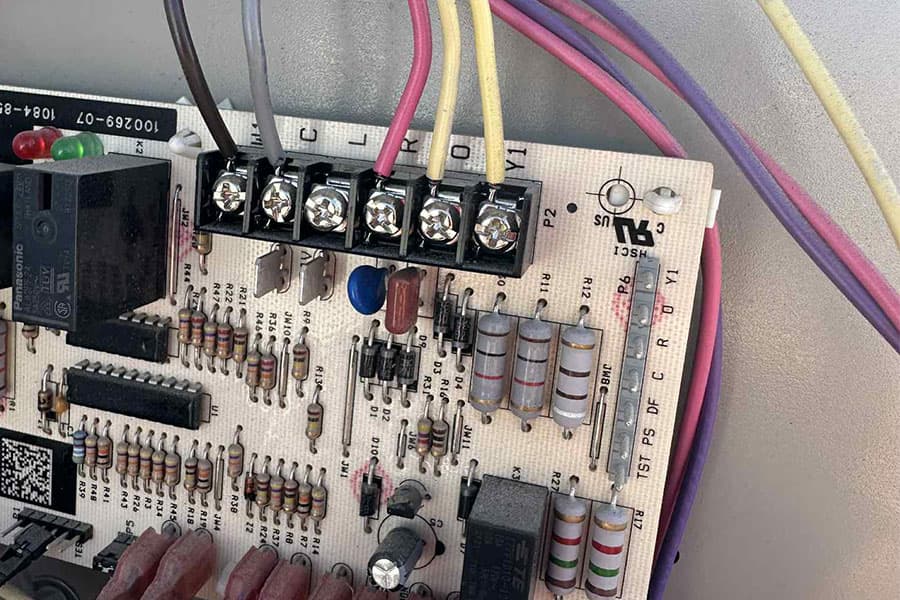
No two homes in Paradise are set up quite the same, so our repairs start with understanding your space. In single-family homes, we often focus on the outdoor unit, refrigerant levels, and how well older ductwork is moving air. In condos and townhomes, we pay close attention to the air handler, drain lines, and airflow around equipment in tight closets.
Common repairs include replacing capacitors, contactors, and fan motors worn down by long run times, fixing refrigerant leaks, clearing clogged drain lines, and cleaning dirty coils. We also check electrical connections that can loosen after years of heavy use. Every step is explained before the work begins.
If a repair will only buy a short amount of time, we tell you that directly. You get the information you need to decide what is right for your home and budget. The choice is always yours.
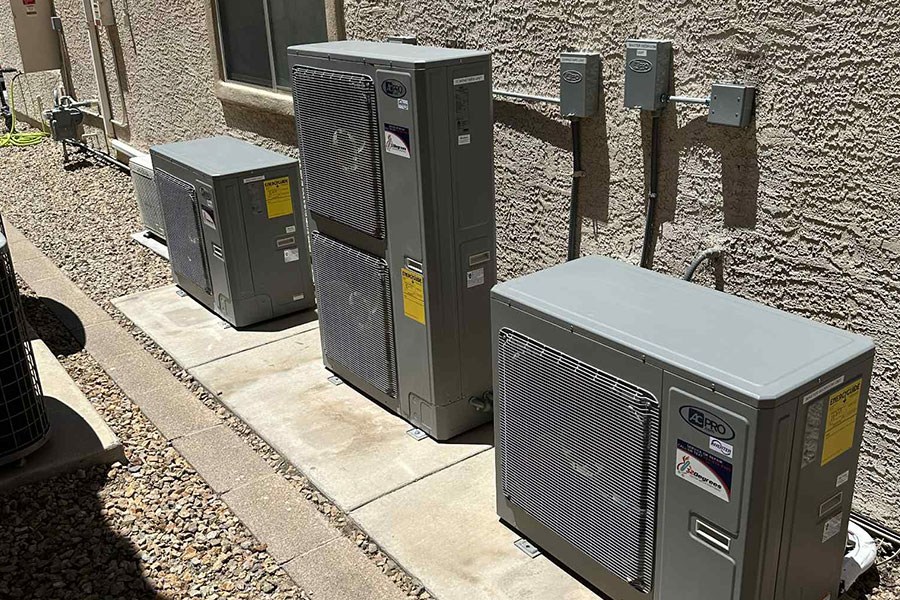
It was close to 10 p.m. in mid-July when Brian realized his house in Paradise Palms was getting warmer instead of cooler. His heat pump, a retrofit installed years earlier, had been running all day and was now blowing barely cool air. He called us first thing the next morning after a long, sticky night.
Our technician found a weak run capacitor and an outdoor coil clogged with dust and debris, a combination that had pushed the compressor to its limit. He replaced the capacitor, cleaned the coil, and checked the older ductwork near the air handler for leaks. He also tightened a loose electrical connection that had been running hot.
By lunchtime, the house was cooling normally again. Brian said he appreciated that nobody tried to talk him into a new system when a repair did the job. That is exactly how we like to work.

People in Paradise call us because they want a company that tells the truth and does the work right.
Comfort is not optional in this part of the valley, and neither is honesty. We bring both to every home we serve in Paradise.
Nighttime temperatures in Paradise stay high, and an aging or struggling system may not keep up. Weak capacitors, dirty coils, or duct leaks are common causes.
Yes. We work on systems in condos, townhomes, and single-family homes, including air handlers tucked into tight closets.
Often, yes. Older ducts may leak or be sized for different equipment, which limits airflow and makes the heat pump work harder.
A failing capacitor, struggling compressor, or loose electrical connection can draw too much power under heavy load. Have it checked rather than resetting the breaker over and over.
Change filters regularly, keep the outdoor unit clear, and schedule maintenance before summer. Small steps like these reduce strain during the long, hot season.